What it does
List your debts, balances, APR and monthly minimums. Add the extra you can pay each month. See a snowball plan and an avalanche plan beside fixed minimum payments only.
Follow each month’s payments, see when every debt is forecast to clear and compare total interest. When a debt clears, its payment rolls to the next debt in the same month.
Keep real payments and statement interest in a separate log. Progress shows the recorded balance and twenty milestones you can mark as you go.
Includes a worked household example and a blank copy. The forecast uses a fixed monthly interest model and fixed minimums. Lender statements can differ.
A real example
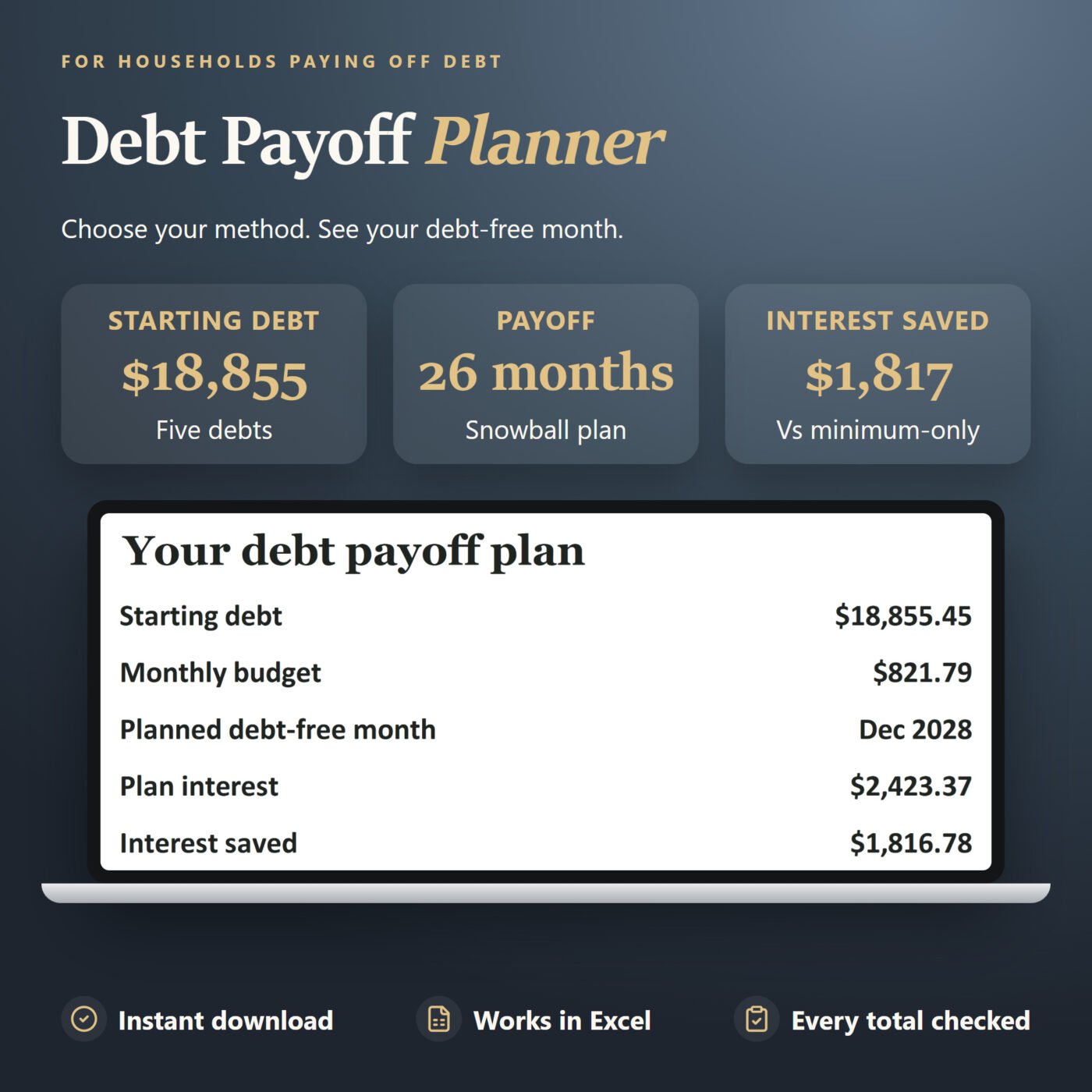
- Starting debt
- $18,855.45
- Snowball interest
- $2,423.37
- Interest saved
- $1,816.78
Morgan household, starting November 2026: $18,855.45 across five debts. Fixed minimums total $646.79; extra each month is $175.00. The $821.79 monthly snowball budget clears the plan in 26 months, with $2,423.37 interest. Minimum-only interest is $4,240.15. Interest saved is $1,816.78. These are example forecasts, not promised savings.

I run Forms and Sheets. If you have a question about this file, you can email me. Email Hamza
What is inside
| Section | What it does |
|---|---|
| Start Here | Steps and the exact monthly calculation rules |
| Dashboard | Payoff month, interest saved and three methods compared |
| Debts | Ten debts with balances, APR and fixed monthly minimums |
| Monthly Plan | Monthly totals and the payment for each debt, one plan year at a time |
| Progress | Recorded balances, payoff dates and twenty milestones |
| Payment Log | Two hundred real payments and statement interest entries |
| Settings | Your household, first month, extra payment and method |
Questions
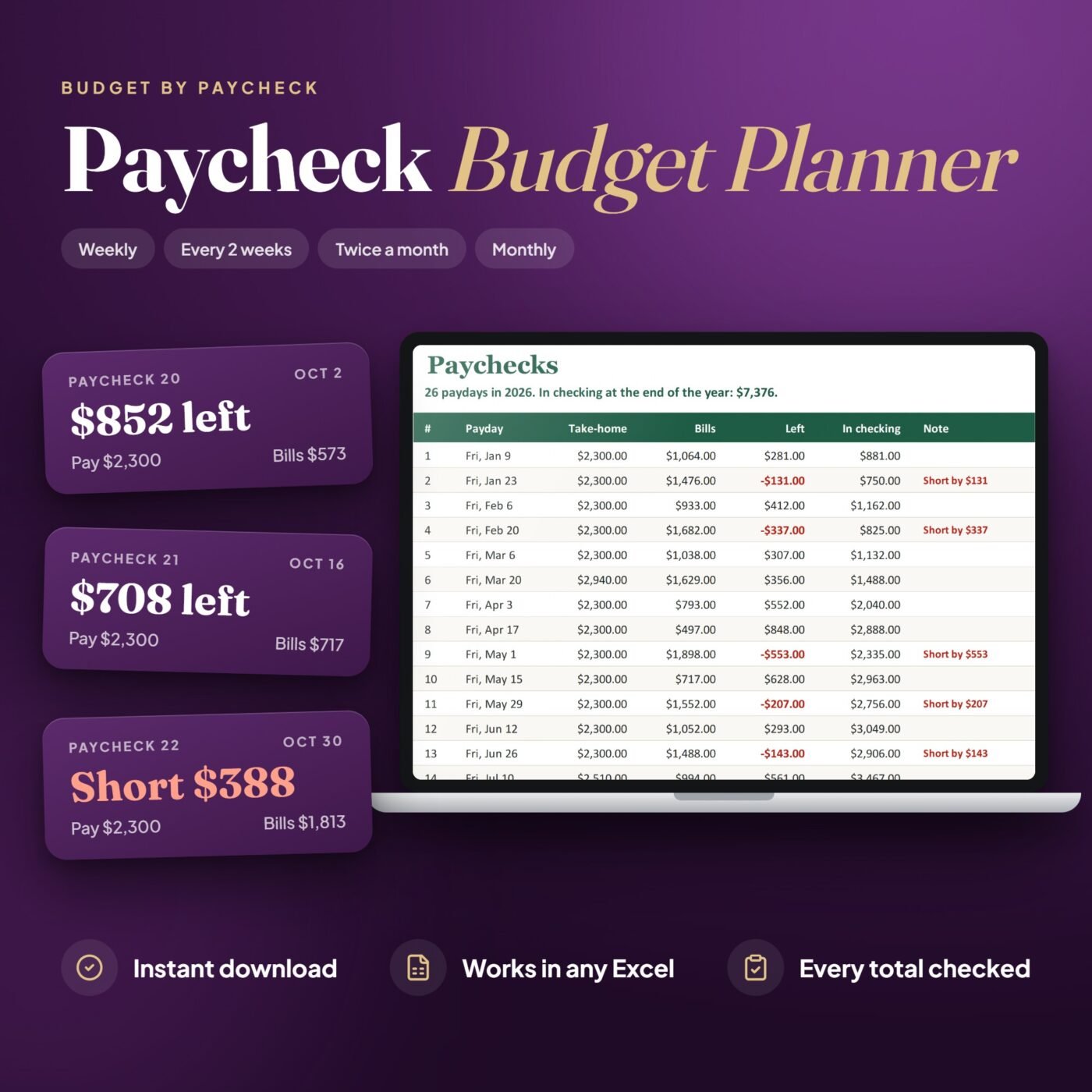
What is the difference from a paycheck budget?
This file plans debt repayment over several years. It does not schedule paydays, household bills or spending categories.
How do snowball and avalanche work?
Both pay every fixed minimum first. Snowball directs extra to the smallest starting balance; avalanche uses the highest APR. Ties use debt row order. Priorities stay fixed.
What happens when a debt is paid?
The freed payment stays in your monthly budget and moves to the next debt in the same month. The final payment is capped at the balance plus that month's interest.
How is interest calculated?
Each month: opening balance times APR divided by 12, rounded to cents, then a month-end payment. This monthly model does not use daily interest, lender-specific minimum rules, fees, new purchases or rate changes.
What is the minimum-only comparison?
The fixed dollar minimum you enter for each debt, with no extra and no roll forward. Interest saved is shown only when both plans finish within 360 months.
What if a minimum does not cover interest?
A minimum below the first monthly interest charge is flagged and excluded. Use your current required payment. Equal-to-interest payments are allowed but can leave the minimum-only plan unfinished.
Does my payment log change the forecast?
No. It tracks real progress separately: starting debt plus recorded interest minus payments. Keep debt names and opening balances fixed once you start logging. Use a new blank copy to replan from current balances.
How much can I enter?
Up to 10 debts and 200 payment entries. Forecasts cover 360 months. Each balance, monthly minimum, extra payment or log amount is limited to $1,000,000; APR is 0% to 100%.
Which spreadsheet app do I need?
Microsoft Excel. The file uses ordinary formulas and no macros. Checked in Microsoft Excel on Windows. Google Sheets, Apple Numbers and Excel on Mac have not been tested.
What files are included?
A worked example and a separate blank Excel workbook. This is a digital download; no physical item is sent.